
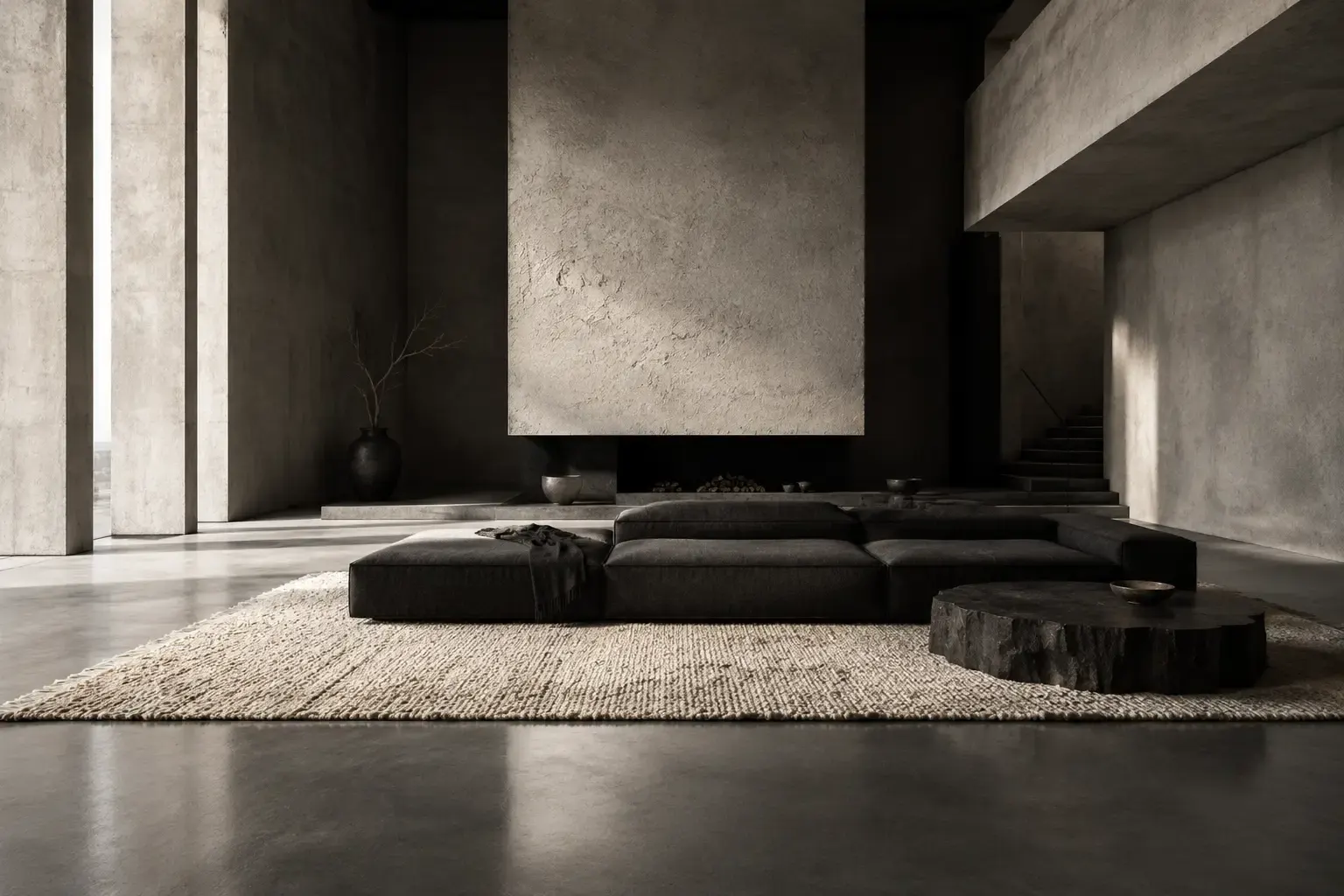
A rug can transform any room from cold and echoey to warm, grounded, and intentionally designed. But here's the truth that most interior designers won't tell you upfront: the single most common mistake people make when buying a rug is choosing the wrong size.
A rug that's too small makes your furniture look like it's floating on an island. A rug that's too large overwhelms the space and hides the flooring you paid good money for. Getting the size right is not a matter of taste — it's a matter of proportion, and proportion is the foundation of good design.
This guide will walk you through the exact rug dimensions you need for every room in your home, whether you live in a compact 2BHK apartment or a sprawling independent villa.
Why Rug Size Matters More Than Pattern or Colour
When you walk into a room with a beautifully designed rug that's the wrong size, you notice the size problem first. Your eye registers the proportional imbalance before it registers the pattern, the colour, or the weave. The reverse is also true: a correctly sized rug in a simple, neutral tone will always look more polished than a stunning, intricate rug that's three feet too short.
This is particularly important in Indian homes, where living rooms often double as gathering spaces for large families, and dining areas may share an open floor plan with the kitchen or living room. The rug needs to define the zone, not just decorate it.
Living Room Rug Sizes
The living room is where most people start — and where the most mistakes happen. The right rug size depends entirely on your seating arrangement.
The "All Legs On" Rule (Recommended for Large Living Rooms)
If you have a spacious living room (200 sq ft or more), the ideal approach is to choose a rug large enough that all your furniture — sofa, armchairs, coffee table — sits entirely on the rug. This creates a cohesive, unified seating area that feels intentional and luxurious.
Recommended sizes: • For a 3-seater sofa with two armchairs: 8×10 feet (240×300 cm) or 9×12 feet (270×360 cm) • For an L-shaped sectional: 9×12 feet (270×360 cm) or larger • For a compact 2-seater setup: 6×9 feet (180×270 cm)
The "Front Legs On" Rule (Best for Medium Living Rooms)
For most Indian living rooms in the 150-200 sq ft range, you'll want the front legs of your sofa and chairs resting on the rug, with the back legs off. This creates visual cohesion without requiring an enormous rug.
Recommended sizes: • Standard 3-seater sofa arrangement: 6×9 feet (180×270 cm) or 8×10 feet (240×300 cm) • The rug should extend at least 30-45 cm (12-18 inches) beyond the coffee table on all sides
The "No Legs On" Rule (For Small Apartments)
If you're working with a compact living space — say a 2BHK apartment where the living room is under 150 sq ft — you can place a smaller rug in front of the sofa as an accent piece. The rug functions as a visual anchor for the coffee table.
Recommended sizes: • 5×7 feet (150×210 cm) or 4×6 feet (120×180 cm) • Ensure the rug is at least as wide as the coffee table, ideally wider
Pro Tip for Indian Living Rooms
In India, many living rooms feature marble or vitrified tile flooring, which tends to make the space feel cold and hard. A rug not only adds warmth but also absorbs sound — a major benefit in apartment buildings with thin walls. If your sofa backs against a wall (as is common in Indian layouts), the rug should extend from about 15 cm under the sofa's front legs to at least 30 cm past the coffee table.
Bedroom Rug Sizes
The bedroom is the second most important room for rug placement, and the rules here are surprisingly specific.
Under the Bed (The Classic Placement)
The most popular approach is to place a large rug under the bed, extending out on three sides (both sides and the foot). You want at least 60-90 cm (2-3 feet) of rug visible on each side when you step out of bed — your feet should land on rug, not cold tile.
Recommended sizes by bed size: • Single (90×190 cm): 5×7 ft (150×210 cm) • Double (135×190 cm): 6×9 ft (180×270 cm) • Queen (150×200 cm): 8×10 ft (240×300 cm) • King (180×200 cm): 9×12 ft (270×360 cm)
Bedside Runner Placement (For Smaller Bedrooms)
If your bedroom is too compact for a full under-bed rug, use two matching runners placed on either side of the bed. This is a particularly elegant solution for Indian bedrooms where wardrobes and dressing tables consume much of the floor space.
Recommended runner sizes: 2.5×8 feet (75×240 cm) or 2×6 feet (60×180 cm) on each side. Place each runner so it extends from roughly the pillow line to slightly past the foot of the bed.
Dining Room Rug Sizes
Dining room rugs require a very specific calculation, and getting this wrong leads to one of the most annoying problems in home design: chair legs catching on the edge of the rug every time someone pushes back from the table.
The Golden Rule
Your dining rug must extend at least 60-75 cm (24-30 inches) beyond the table on all sides. This ensures that chairs remain fully on the rug even when pulled out for sitting.
Recommended sizes by table size: • 4-seater (120×75 cm, rectangular): 6×9 ft (180×270 cm) • 6-seater (180×90 cm, rectangular): 8×10 ft (240×300 cm) • 8-seater (240×100 cm, rectangular): 9×12 ft (270×360 cm) • 4-seater (120 cm diameter, round): 8 ft round (240 cm) • 6-seater (150 cm diameter, round): 9 ft round (270 cm)
A Note on Indian Dining Habits
In many Indian households, the dining table doubles as a homework station, a work-from-home desk, or a gathering point for chai and conversation. This means the rug under the dining table sees heavy foot traffic and potential spills. We recommend choosing a flatweave or low-pile rug for this area — it's easier to clean and chair legs glide over it without snagging.
Hallway and Entryway Runner Sizes
Runners are the most underestimated rug type. A well-chosen hallway runner immediately elevates the experience of walking through your home.
Sizing Rules for Runners: • Width: approximately half to two-thirds the width of your hallway • Length: Leave 15-30 cm of bare floor at both ends
Common runner sizes: • 2.5×8 feet (75×240 cm) — standard hallways • 2.5×10 feet (75×300 cm) — longer corridors • 2.5×12 feet (75×360 cm) — extended entryways
Study and Home Office Rug Sizes
With remote work now permanent, the home office is critical. A rug here defines your workspace, absorbs noise during video calls, and adds warmth.
Recommended sizes: • 5×7 feet (150×210 cm) — under the desk and chair • 6×9 feet (180×270 cm) — if the room includes a reading corner
The Reknott Approach to Custom Sizing
Standard rug sizes work for standard rooms. But Indian homes are anything but standard. Colonial-era bungalows have oddly shaped verandahs. Modern apartments have L-shaped living rooms. Heritage havelis have circular courtyards.
This is precisely why we built our Custom Studio. If your space demands a specific dimension — say a 7×11 foot rug for an unusually deep living room, or a 3×14 foot runner for a long corridor — our artisans in Bhadohi can weave it to your exact specifications.
Before You Buy: The Tape Measure Test
Before ordering any rug, do this simple exercise:
- 01Clear the room or push furniture to the walls
- 02Use painter's tape to mark the outline of the rug size on the floor
- 03Move your furniture back into position on top of the tape outline
- 04Step back and evaluate — does the rug feel proportionate?
- 05Live with the tape for a day or two
This five-minute exercise has saved countless homeowners from expensive sizing mistakes. It costs nothing and eliminates guesswork entirely.
Final Thought
The right rug size isn't about following a formula blindly — it's about understanding the proportions of your specific space. Trust your eye. If a rug feels too small when you tape out the dimensions, go one size up. A rug that's slightly larger than necessary always looks better than one that's slightly too small.